
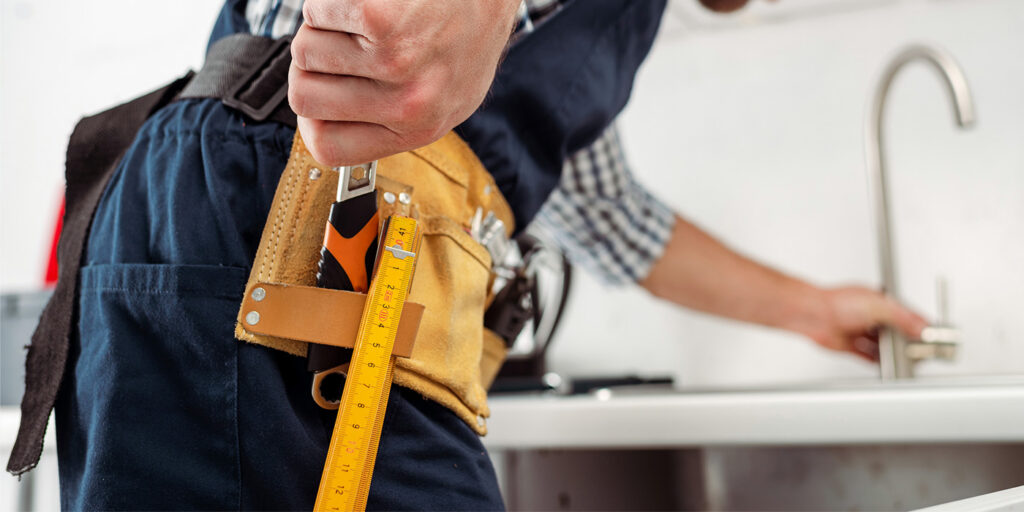
Our online plumber course provides the foundational skills needed to start a stable, in‑demand career in the plumbing industry. With aging infrastructure and a shrinking skilled‑trade workforce, qualified plumbers are more essential than ever across residential, commercial, and industrial environments.
This comprehensive, self‑paced program offers training throughout the course through 88 interactivities, including magnets, checkboxes, flashcards, select-a-choice, learning checks, and a matching game. It even offers you access to 34 custom videos and two linked e-books. Throughout this plumber training program, you follow the journey of three plumbers at different stages of their careers: master, journeyman, and apprentice.
Gain a working understanding of plumbing materials, tools, systems, math, and safety. To support hands‑on learning, your enrollment includes a 59‑piece plumbing practice kit with PVC pipes and fittings, as well as a 55-piece plumber toolkit, allowing you to practice core techniques at home.
Prerequisite: None
Textbook: The instructional materials required for this course are included in enrollment and will be available online.
Location | Day(s) | Price | |
|
|
| Register |
According to the U.S. Bureau of Labor Statistics (BLS), the median annual salary for plumbers, pipefitters, and steamfitters was $62,970 in May 2024. Employment for these trained professionals is projected to grow from 2024 to 2034, with an average of about 44,000 job openings each year over the decade.
Plumbers are essential to maintaining water supply, drainage, and sanitation systems, services that are never outsourced or automated. From residential repair and new construction to commercial and industrial installations, trained plumbers can pursue diverse opportunities.
Plumber FAQs
The U.S. Bureau of Labor Statistics states that plumbers install and repair water, gas, and other piping systems in homes, businesses, and factories. They install plumbing fixtures, such as bathtubs and toilets, and appliances, such as dishwashers and water heaters. They clean drains, remove obstructions, and repair or replace broken pipes and fixtures. Plumbers also help maintain septic systems.
The U.S. Bureau of Labor Statistics reports that plumbers work in factories, homes, businesses, and other locations where pipes and related systems are present. Plumbers may lift heavy materials, climb ladders, and work in tight spaces. Some plumbers travel to work sites every day. Outdoor work, in all types of weather, may be required.
No.
Please click here to see the curriculum outline, price, course details, and frequently asked questions.
